
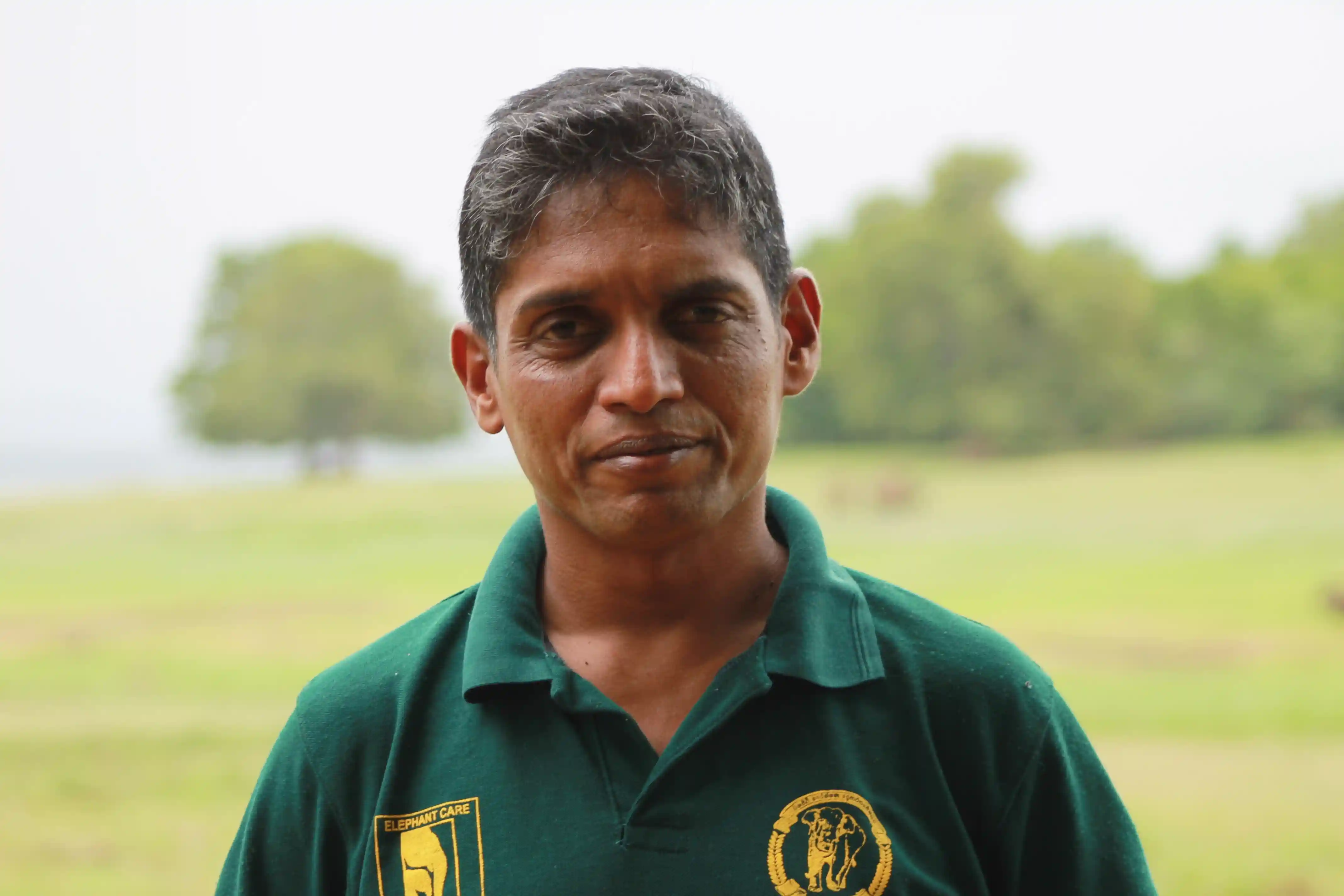
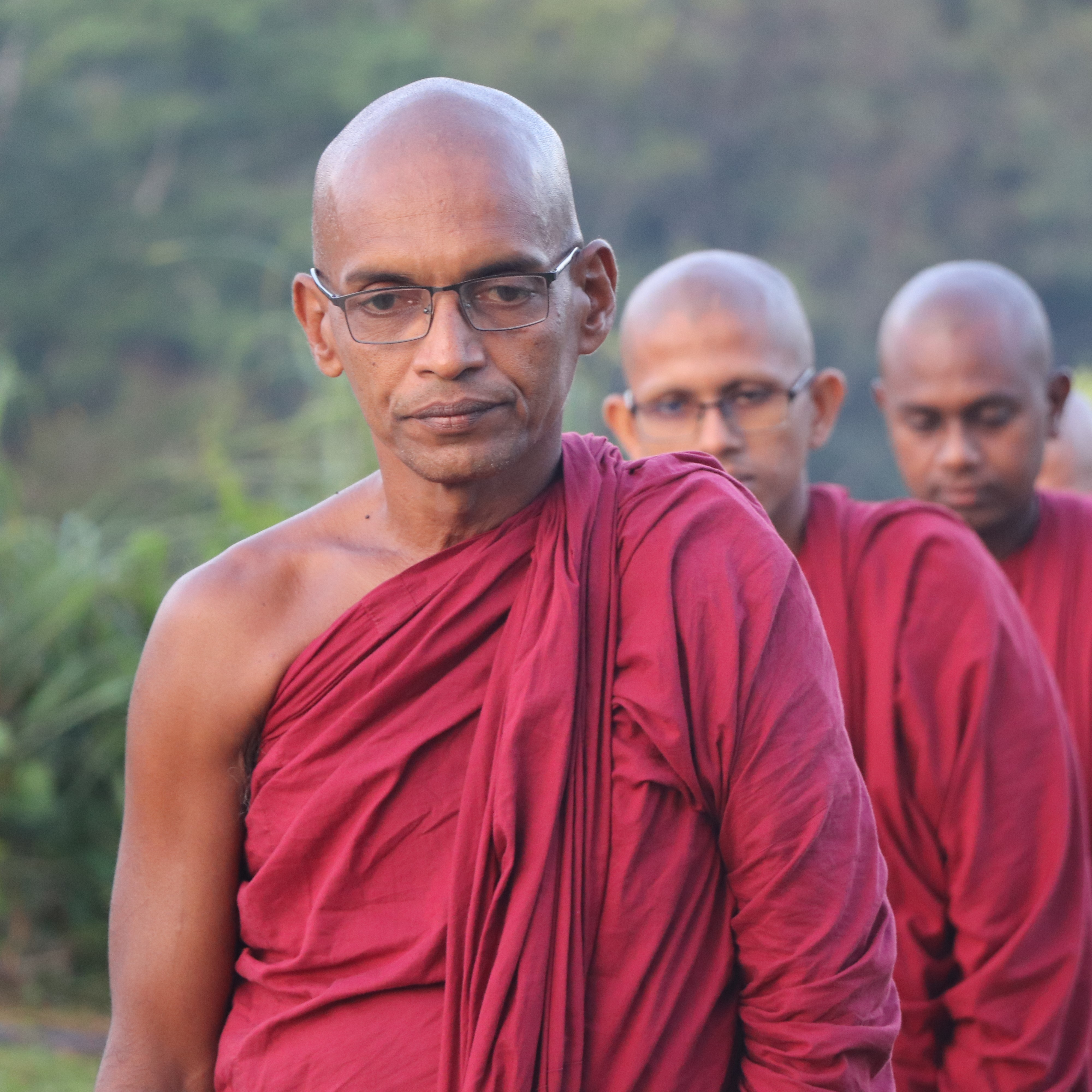
THE FOUNDER
Venerable Panadure Vimukthirathana Thissa (Formerly Dr. B. Vijitha Perera)
BVSc, MSc (Wild Animal Health), MSc (Biodiversity), DESMAN, PhD
Conservation Veterinarian: Wildlife Health, Rehabilitation, Translocation and Human-Wildlife Conflict Management.
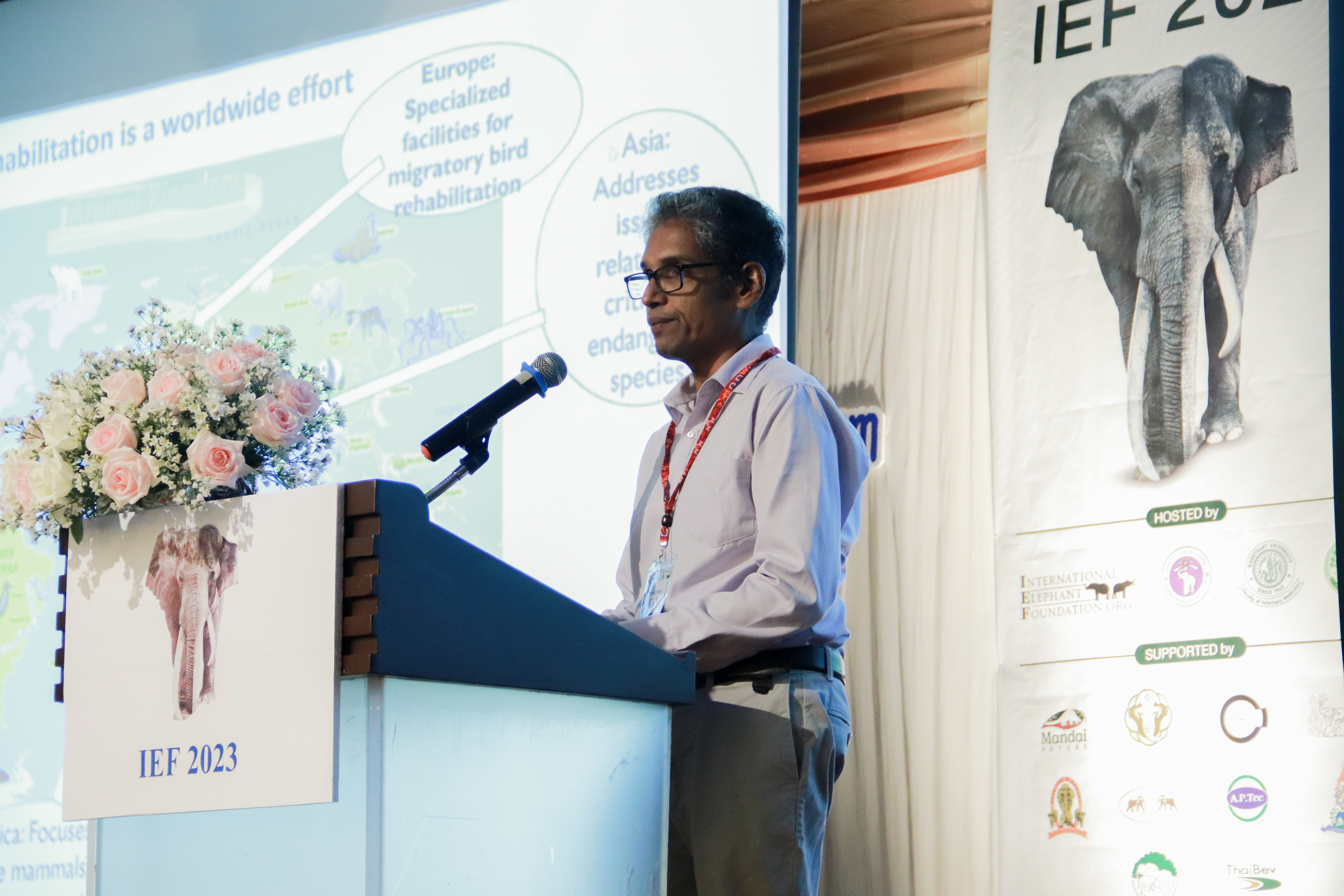
Member IUCN SSC Asian Elephant Specialist group & Conservation Translocation Specialist Groups
From Compassionate Fieldwork to Conscious Conservation
For 26 years, the Founder served at the physical frontlines of one of the world’s most complex biodiversity landscapes. His career helped shape the standards for ethical wildlife medicine and conflict mitigation in Sri Lanka.
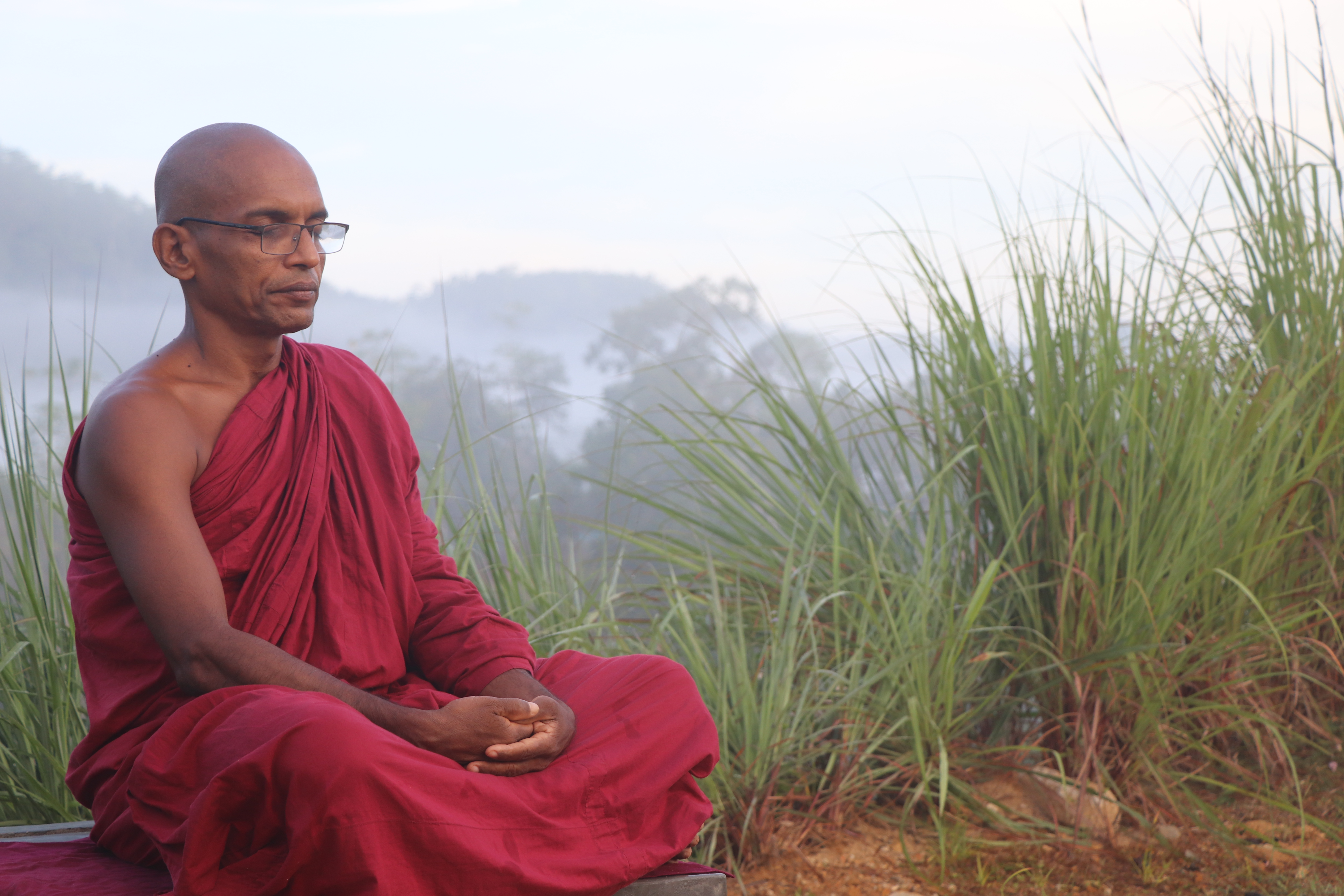
Today, he bridges the rigor of a scientist with the clarity of a monk, establishing the Noble Conservation Center to treat the mind where all action begins.
FIELD IMPACT
A Career of Direct Action: Serving the Giants of Sri Lanka
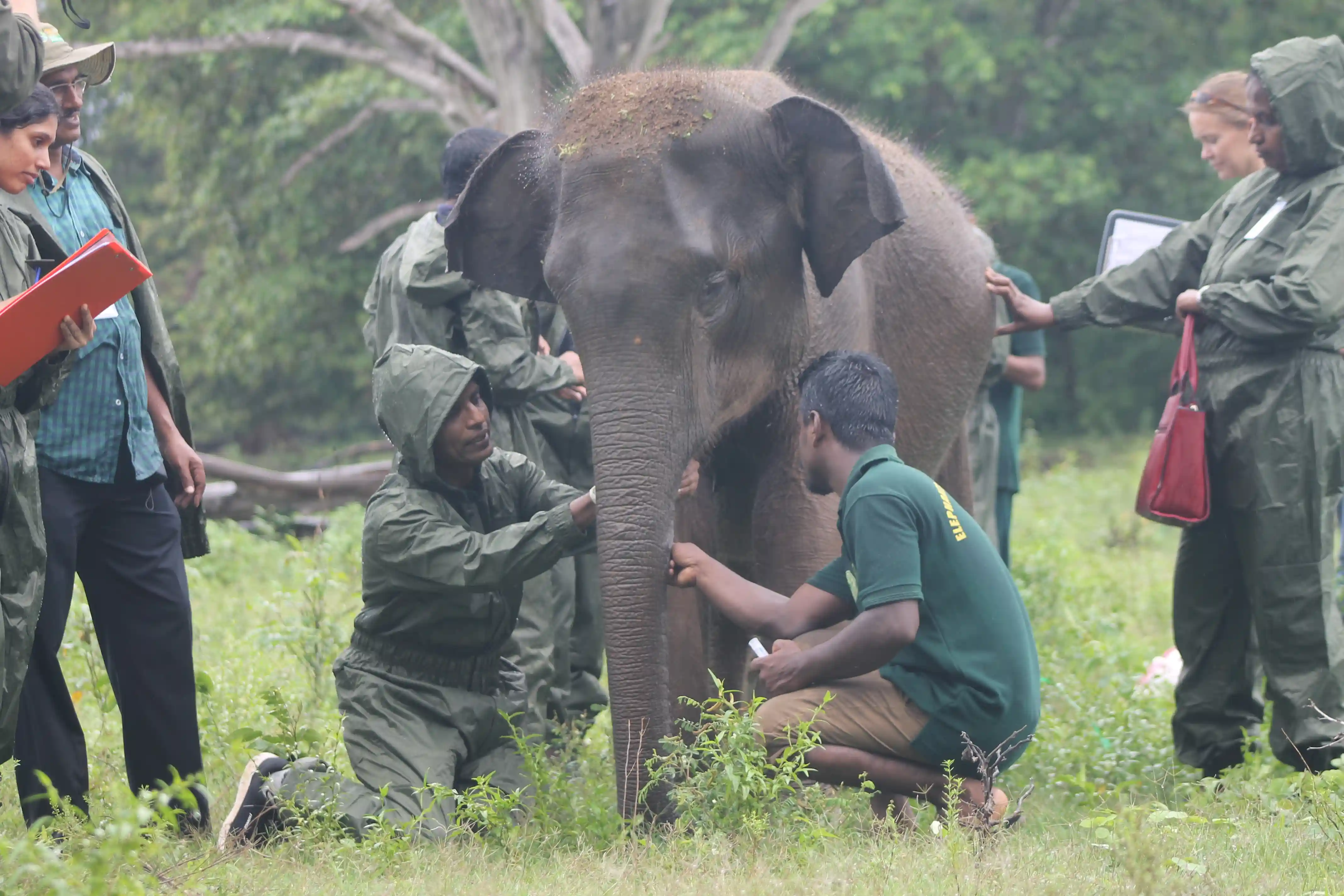
Sri Lanka holds one of the highest densities of free-ranging Asian elephants in the world, while also experiencing intense human–elephant conflict. During his government service, Dr. Perera:
Injured Wild Elephants Treated
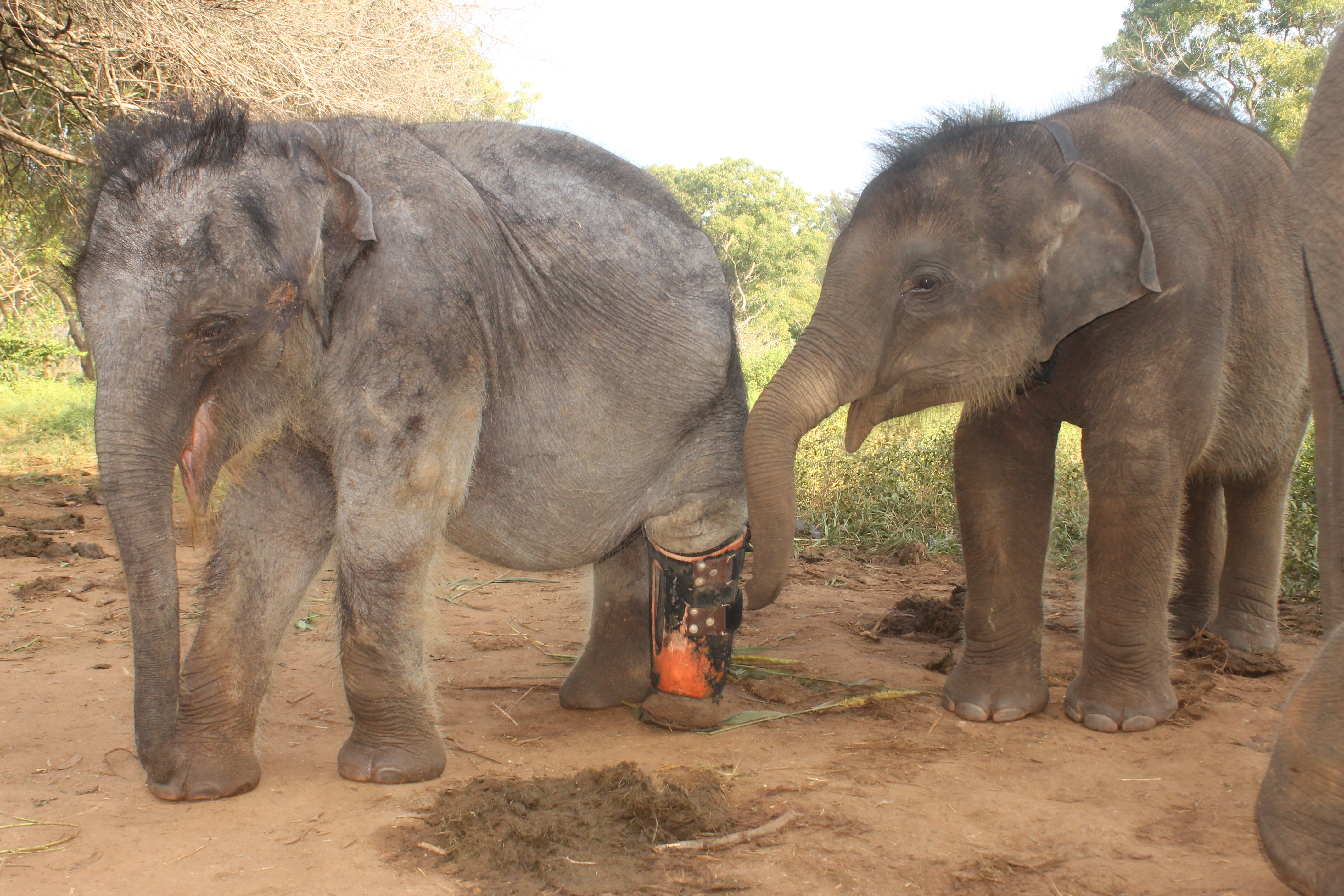
Orphaned Calves Rehabilitated
Radio-Collared Wild Elephants
Elephants Released to Wild
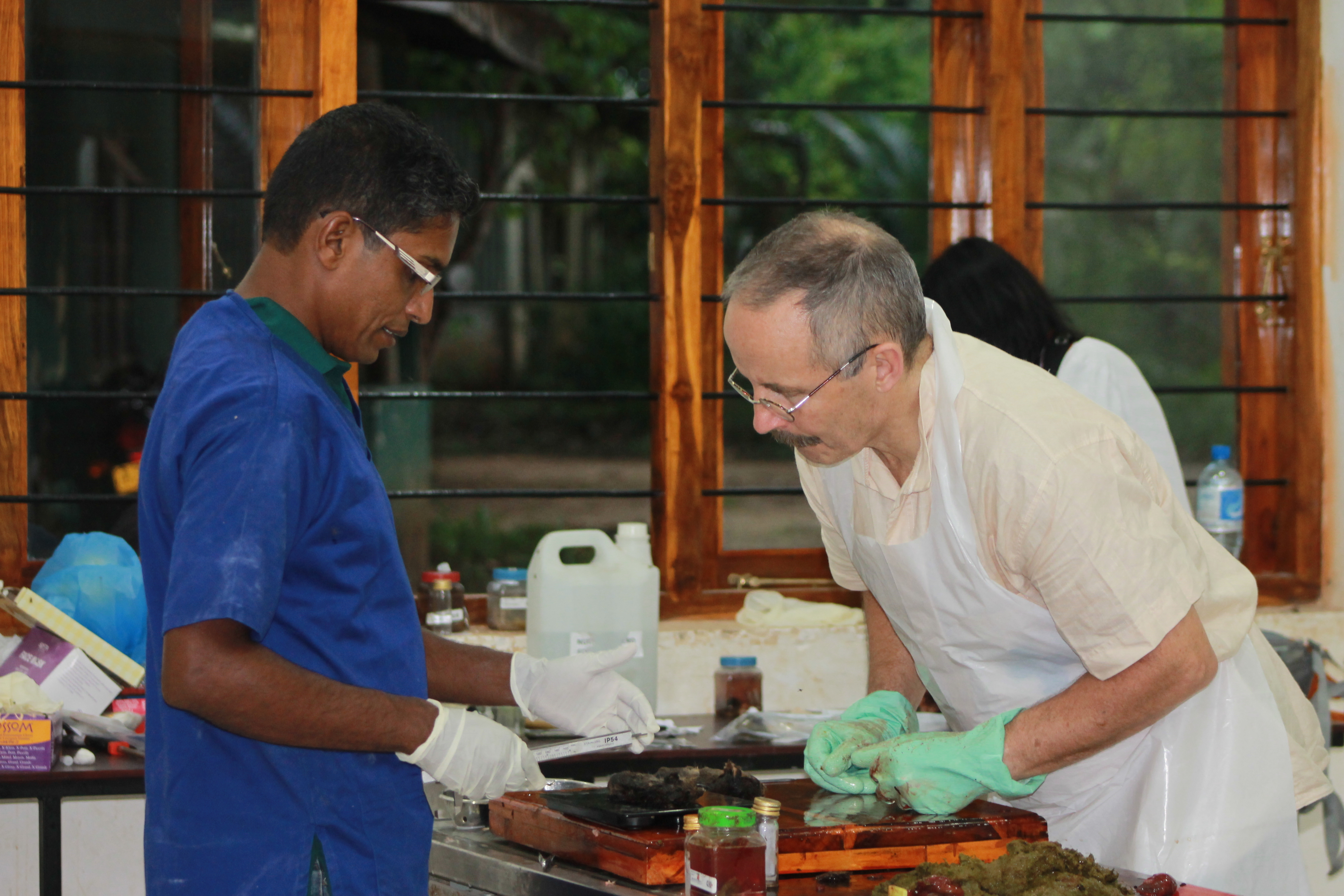
Post-Mortem Examinations
His field operations were often carried out under extreme and high-risk conditions, including rescues of animals injured by gunshots, landmines, railway collisions, and agricultural conflict - including critical service in war-affected regions. This long-term field engagement forms the empirical foundation of his conservation perspective.
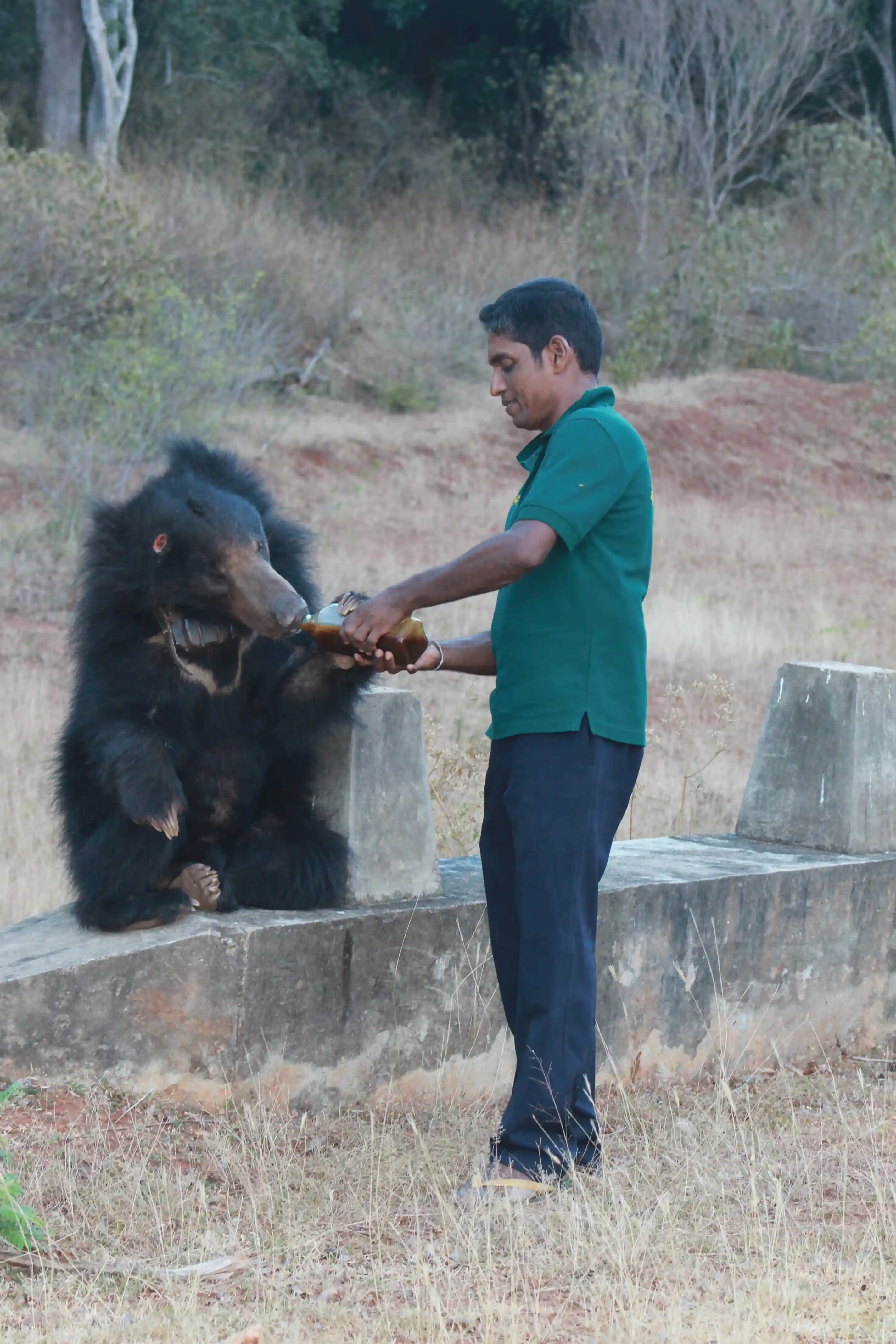
- Conducted thousands of veterinary interventions involving mammals, reptiles, birds, and marine species.
Academic Foundations in Wild Animal Health and Conservation
Dr. Perera’s field experience is supported by an international academic record reflecting sustained engagement with the biological, ecological, and ethical dimensions of wildlife survival. His academic formation includes:
Doctoral Research
Evaluation of one of the world’s longest-running elephant rehabilitation programs (1998–2022) while simultaneously serving as program leader for 26 years. Jointly supervised by experts from the Smithsonian Conservation Institution (USA), the Royal Veterinary College (London), and the University of Peradeniya.
Wild Animal Health
MSc. Wild Animal Health Conducted at the Royal Veterinary College (RVC), University of London, in strategic partnership with the Zoological Society of London (ZSL). This specialization bridged frontline clinical medicine with advanced conservation science, providing the professional framework for high-level wildlife health interventions.
Biodiversity Conservation
MSc. Biodiversity Conservation Management -Postgraduate studies in Biodiversity Conservation Management at the Postgraduate Institute of Science (PGIS), University of Peradeniya, focusing on the systemic management of ecological balance and institutional stability.
Endangered Species
Diploma in Endangered Species Management This professional training was completed at the Durrell Wildlife Conservation Academy (Jersey) in collaboration with the University of Kent, UK. The program focused on advanced survival strategies and field management for at-risk species, bridging theoretical conservation biology with the practical demands of preventing extinction in the wild.
Advanced Bioethics
Leadership in Wildlife Welfare and Bioethics Ethical integrity was prioritized through Intensive and Advanced Bioethics courses conducted by the WHO and King’s College London. Further specialization was gained through the "Animals, Ethics, and Society" program at the University of Warwick and long-term engagement with the University Federation for Animal Welfare (UK).
Bachelor of Veterinary Science
The foundational degree in clinical medicine and animal health from the University of Peradeniya, Sri Lanka, providing the biological baseline for 26 years of frontline intervention on wildlife health.
Global Field Training and Exposure He has gained critical hands-on experience and advanced training at leading international wildlife and conservation institutions, including: College of African Wildlife Management, Tanzania & Kenyan Wildlife Service, Kenya. Budongo Conservation Field Station, Uganda & Myanmar Timber Industry, Myanmar. National Institute of Elephants, Thailand & Wildlife Institute of India, India. Durrell Conservation Academy and Zoological Society London, UK.
From Emergency Response to Systemic Reflection
Years of direct intervention in wildlife crises revealed that ecological emergencies often arise from deeper structural causes - including land-use pressure, policy gaps, institutional limitations, and social dynamics. Repeated exposure to conflict landscapes led Dr. Perera to examine:
- check_circle Root causes of human–wildlife conflict
- check_circle Institutional strain within conservation systems
- check_circle Ethical fatigue among field professionals
- check_circle Gaps between policy frameworks and field realities
- check_circle The connection between human decision-making and environmental outcomes
This transition marked a shift from reactive wildlife treatment toward systemic, cause-and-effect–based conservation thinking.
The Founding of the Noble Conservation Center
The Noble Conservation Center was established from a central realization: Sustainable conservation requires more than protecting ecosystems it requires strengthening the people entrusted to protect them. We were founded to address the immense pressure faced by those on the frontlines by focusing on these core pillars:
Support Conservation Professionals Under Strain Providing psychological and ethical support for those facing the mental exhaustion of constant crises and high-stakes decision-making.
Promote Mindful Cause-and-Effect Awareness Moving beyond reactive survival to precise, field-informed action by understanding the deep roots of environmental issues.
Integrate Wildlife Science with Systems Thinking Combining technical ecological expertise with reflective practice to create more resilient and effective conservation strategies.
Prepare Future Leaders with Grounded Insight Equipping the next generation of protectors with the mental clarity and resilience needed to sustain long-term ecological responsibility.
We believe that when the mind of the conservationist is steady, nature is better protected.